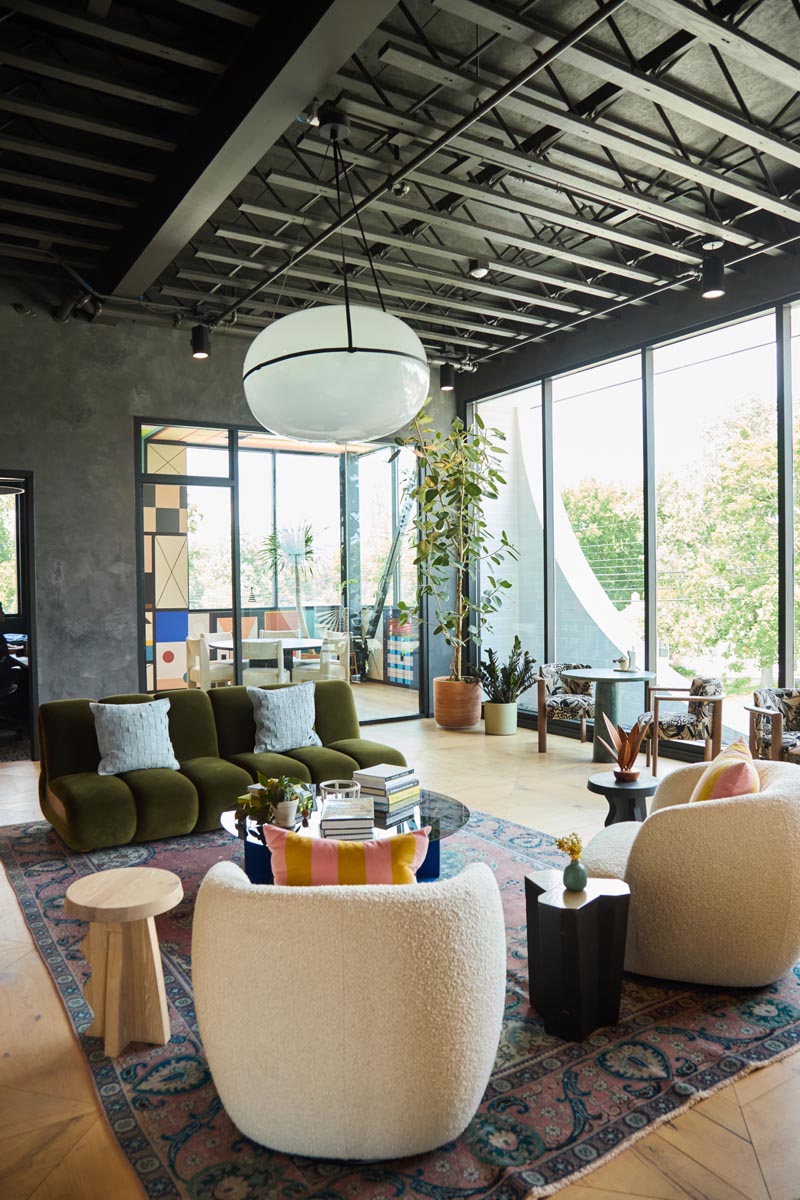
Maybe the walls in Powell’s new Berry Hill headquarters can’t talk, but they’re certainly telling stories.
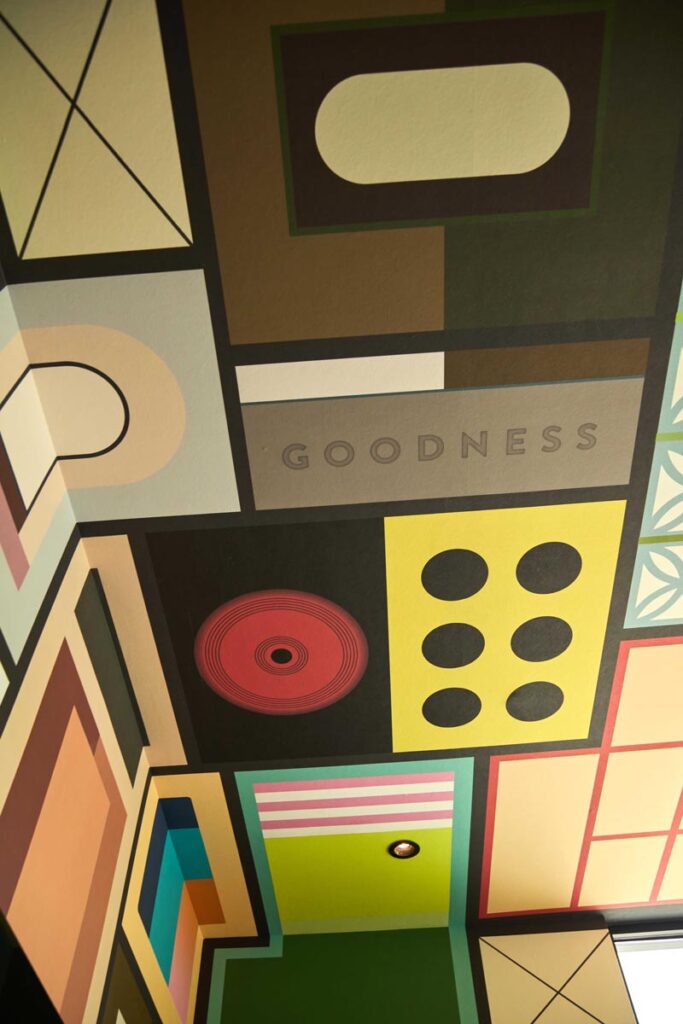
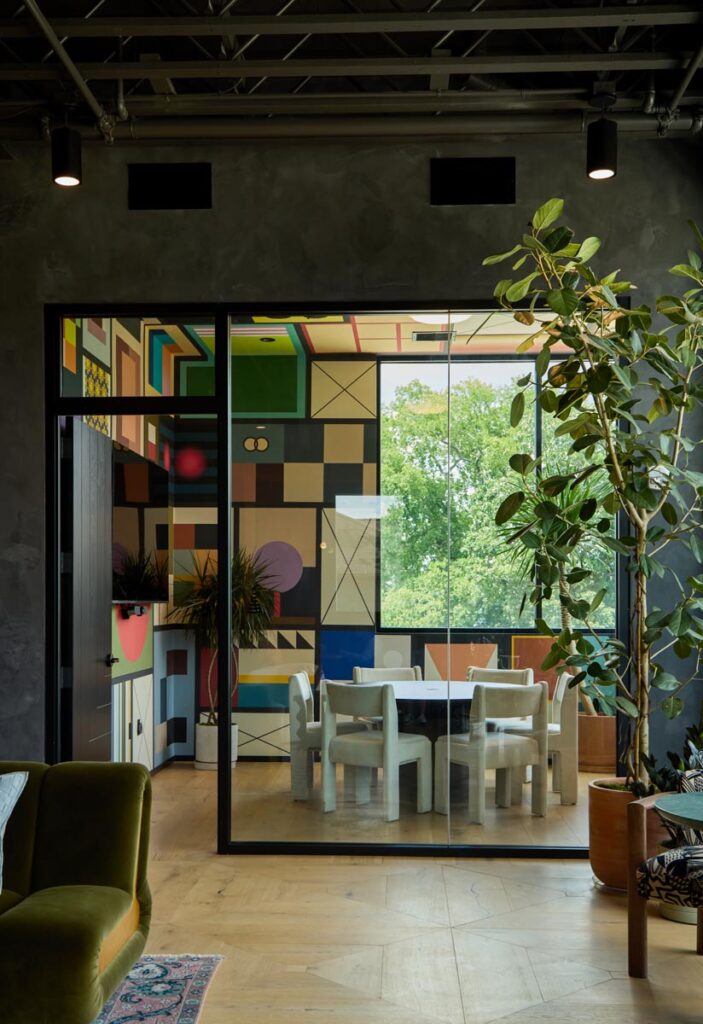
In the conference room that looks onto Bransford Avenue, custom wallpaper — a collaboration with surface design studio New Hat — turns a selection of Powell’s greatest hits into a purposeful patchwork dubbed “Project Palettes.”
“Every rectangle (references) a different project — the color palette and elemental features,” says Powell partner, chief creative officer, and interior designer Katie Vance, pointing toward the pastiche of earth tones, soft pastels, primarys and near-neons, with geometric slabs and delicate linework tiptoeing in, around, and in between.
“That’s O-Ku,” she says, bringing up a block that pays homage to that restaurant’s lilac leather. “And that’s Mojo’s Tacos. That’s Audrey. That’s Fancypants.”
All those restaurant projects, spanning years of Powell’s rise as one of Nashville’s premier architecture and design studios, inhabit wildly different worlds of inspiration. Industrial textures and Aztec patterns. Warm organics and shou sugi ban vibes. Florals and fire-engine red.
“It was wild to really take in how every space they’ve done is wholly unique,” says Elizabeth Williams, New Hat’s co-founder and captain. “There’s no template that they follow to make things easier or faster. I don’t think most designers/architects can say that.”
Collected into one wallpaper design, it should be chaos. But as Powell closes in on 20 years of beautifying Music City, they’ve made a unique knack and a refreshing message clear: Bold and boundary-pushing isn’t just doable, when you’re partnered with the right people; it’s duty.
“I always say, if part of it doesn’t feel risky, it’s not worth doing,” Vance says.
Growing and Glowing Up
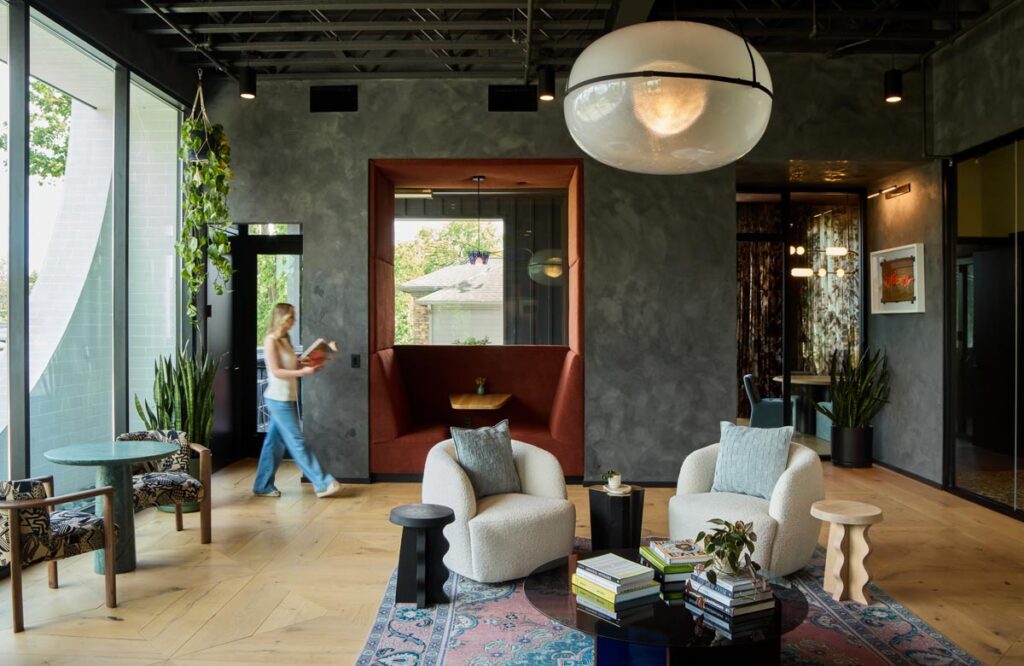
A project several years in the making, the new Powell headquarters serves multiple functions. It’s a dynamic architecture, design, and construction showpiece. It’s a practical necessity — somewhere to park, plan, and perform with the team. And it’s a place to grow, not just creatively and artistically, but in broader business directions.
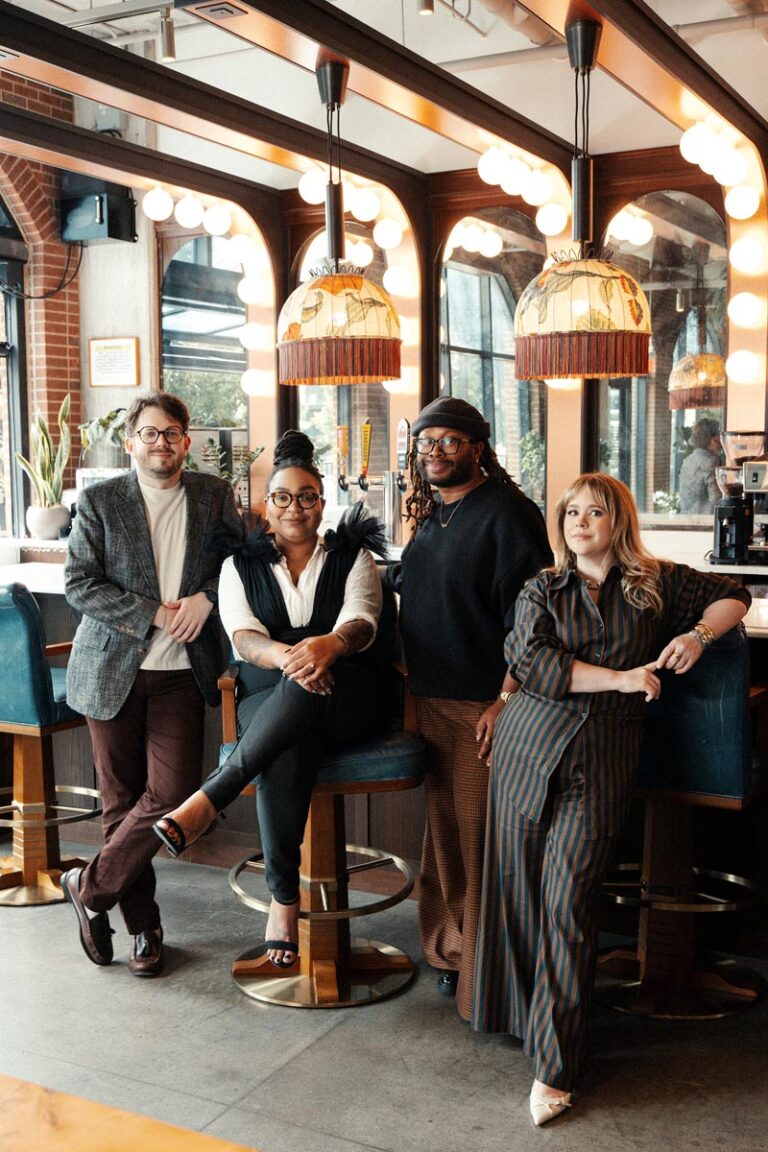
The studio’s three partners — CEO and architect Luke Tidwell, chief development officer and general contractor Chad Roberts, and Vance — led every step of envisioning, designing, and building their hub at 2813 Bransford Avenue.
Powell had more than outgrown the cozy East Nashville office they’d worked in for years. And they were getting busier pushing out the borders of the business, adding luxury residential design to their commercial foundation around 2021. Now they were eyeing expansion into development.
With the move, Vance says, “I think that was our goal: to create something for ourselves, and then show that we could get into development.”
Powell purchased two lots, and start to finish, shaped a three-floor, nearly 10,000-square-foot building to showcase their capabilities, house their operations, and accommodate likeminded tenants. STAT Wellness, a luxury functional medicine and movement studio (and Powell client), now occupies the first and top floors, with Powell taking the second.
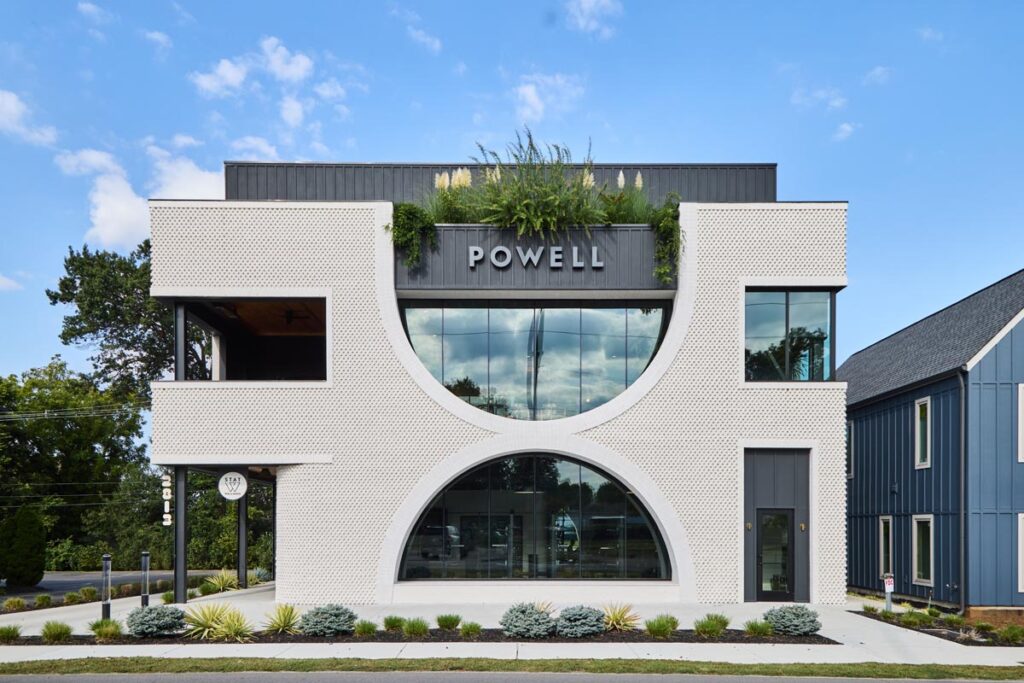
Although it’s their first development project, the team pulled no punches. Even from the street, the building practically howls “Powell” — arches and angles in the architecture directly reference the studio’s stacked-shapes brand identity, and the closer you move, the more the bold details come into view.
“Far away, you’re seeing how the shapes progress,” Vance says. “When you get closer, you get more of the texture.”
That texture brings an inspiring balance, glass and metal cutting sleek slices into a curved expanse of concrete block installed to surface the corners. It looks almost unnaturally natural, like giant petrified reptile scales. The Powell team had used this technique as an accent before, but never an entire facade.
“The mason wanted to literally murder us when he looked through that curve,” Vance says, laughing. “He was like, ‘Do not give out my name to do curved brick on a 45.’”
Collaborating With Nashville
Powell’s collaborators — even when under installation duress — tend to play a powerful role in the studio’s creative process. That’s by design and by preference. So completing this new HQ meant an opportunity to put favorites and longtime partners, like New Hat, on prominent display.
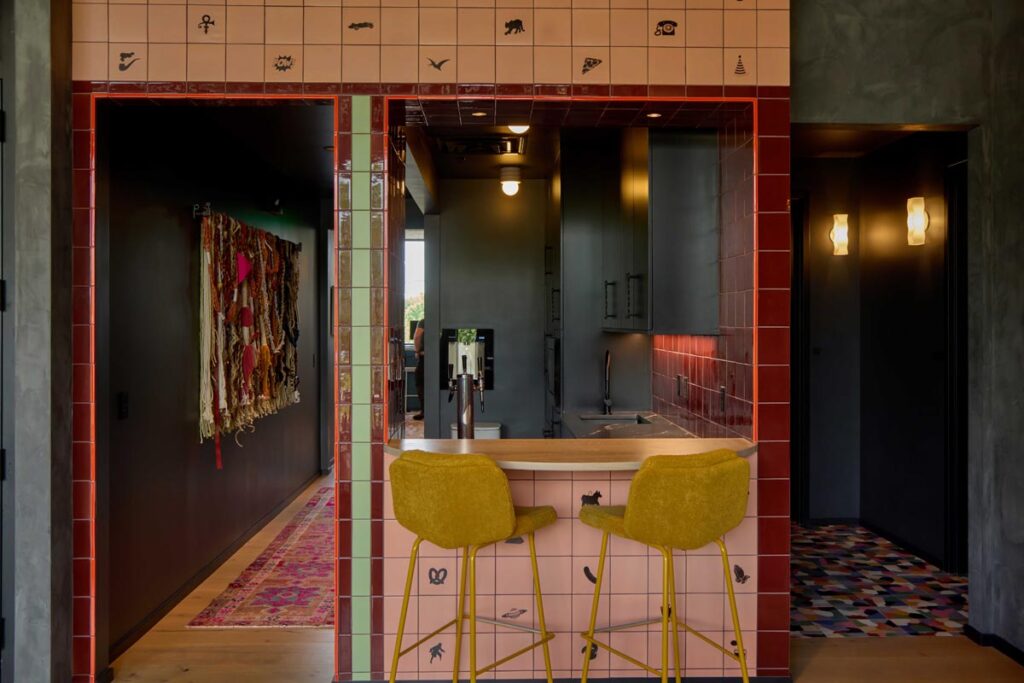
Along with “Project Palettes,” the Nashville surface design studio teamed with Powell and fellow locals Red Rock Tileworks on custom kitchen bar tiles that tell another visual story. The concept: a bodega that only sells things that begin with the letter P, for Powell.
“The hardest one is the racecar,” Vance says, offering a sly twinkle. (It’s a palindrome.)
From a distance, the concept might seem silly, but to the creative crew involved, it was an inspiring narrative to jump off of.
“This is a great example of why Powell’s designs can be so fun,” Williams says. “It starts with a narrative that clients can find meaning in instead of just, ‘Here’s some cool stuff that will look cool in your cool place.’ Katie is often providing us, her collaborators, with these narrative cues.”
Other locals and longtime partners who contributed to the new HQ include Mesa, who built a Pullman-style boucle-upholstered booth for the lounge; Southern Lights Electric, who supplied style-forward custom lighting; and HollerDesign, who shaped grand custom doors and tables. All together, 13 local artists, makers, and design companies contributed mostly made-to-order work.
Taken together, it might seem like the Powell HQ is absolutely busting with custom. And it is. But that’s another tale the team is intentionally telling.
“We want to showcase the different collaborations that are possible with projects,” Vance says, “but I think also, a lot of times people think custom sounds scary and pricey and just out of the realm. We want to show that it actually can be a fun, easy process, if you work with the right people.”
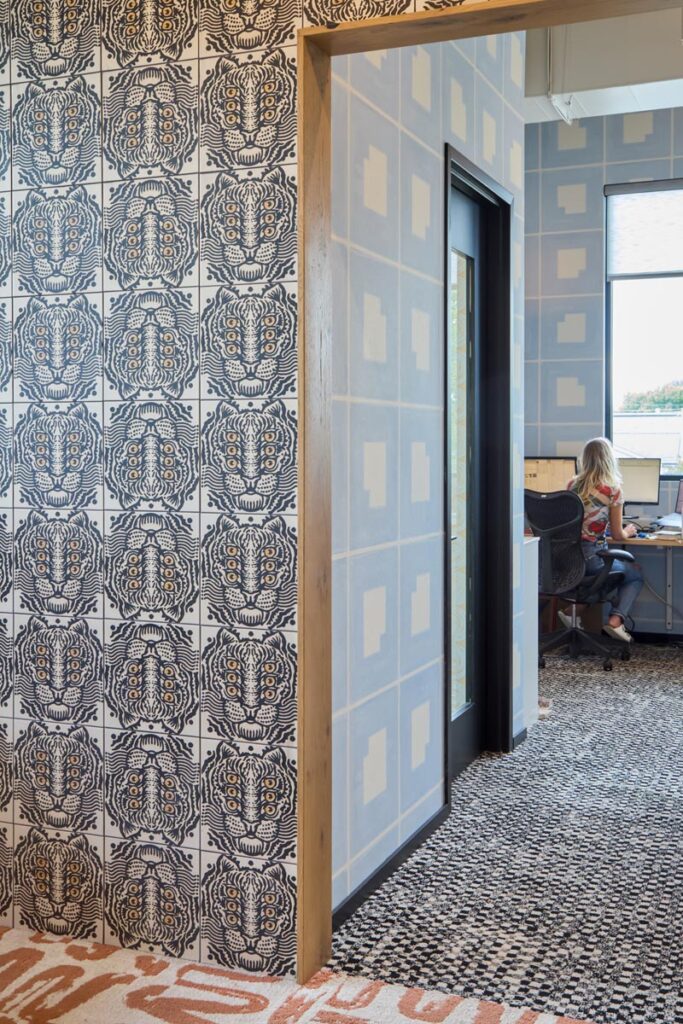
Still, Powell isn’t closed off to off-the-shelf finishes, when they’re inspiring and fit the project. In the HQ’s open workspace, floor-to-ceiling feature walls showcase “WILD,” a loud and powerful tile design from Nashville’s Haustile, featuring abstract tiger shapes with six gleaming eyes.
The Powell team was obsessed with the unflinching pattern. Haustile co-owner Lindsay Sheets was stoked, because, she told Vance, “People are scared to use it.”
Vance remembers the conversation, smiling. “I said, ‘Well, we’re not.’”