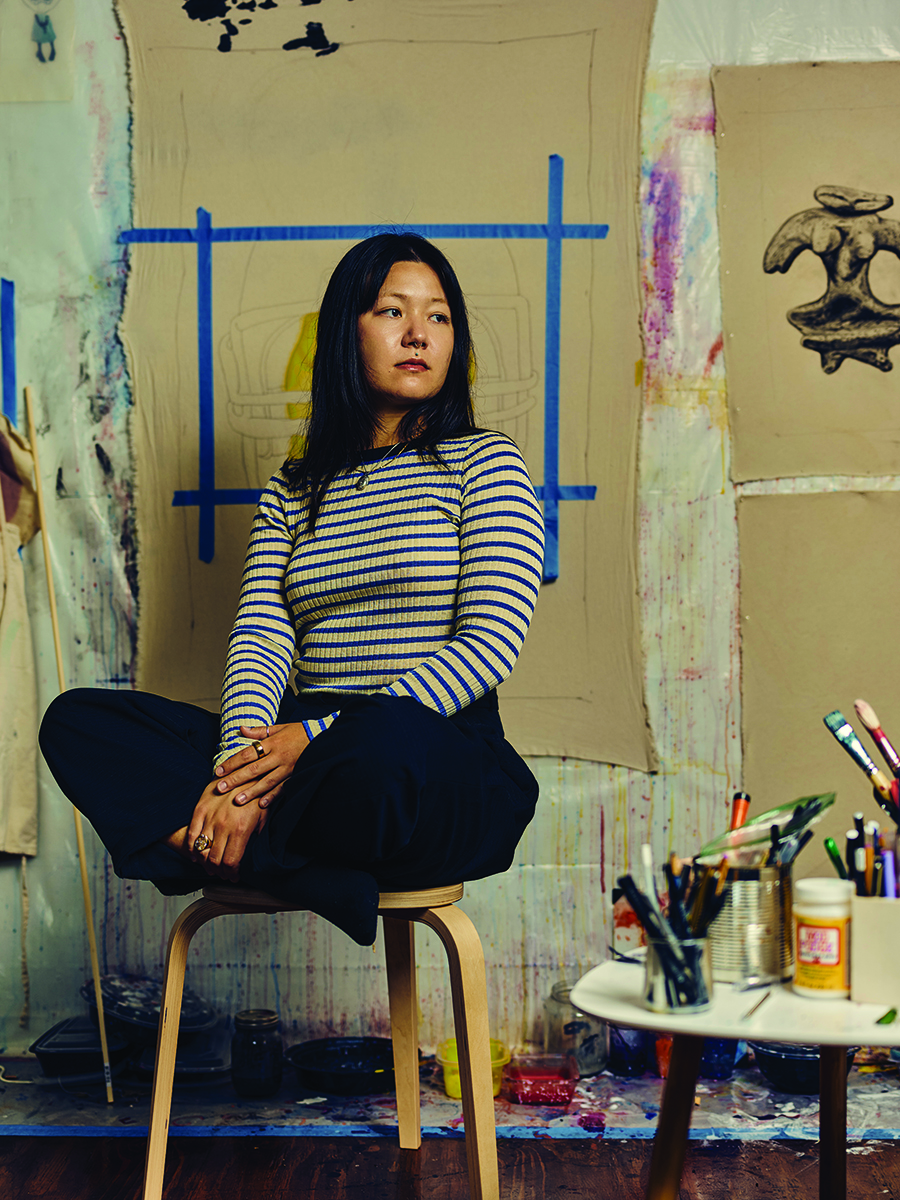
For Nashville native Sai Clayton, the cultural intersection of her family tree provides a foundation for her artistic exploration. The parallels between her differing family histories can highlight both the similarities and differences between the two cultures.
“My American grandfather would go fishing, and he had an outdoor sink where he’d cut and fillet and fry the fish. That, to me, is a very Southern thing, a huge part of my upbringing.
“Meanwhile, my Japanese grandfather would wake up and go to the fish markets first thing in the morning and buy fish and take it to another guy who would cut it into sashimi for him to pick up later.”
She, the curatorial director at COOP Gallery in Nashville, is known for her iconic self-portrait series, which she places in abstracted scenes that help place these cultural parallels into a visual framework.
“I began doodling self-portraits as it was such an accessible subject matter, but I could never fully see myself in my own drawings, which led to this focus on my racial identity and the lack of biracial visibility that I had growing up in the South,” she says.
“These self-portraits are very representative. I don’t want my work to be about me specifically; I see them as a launching point for wider discussions around identity.”
Clayton’s work stands out through the richness of her visual language, drawing on the cultural connections between the two countries.
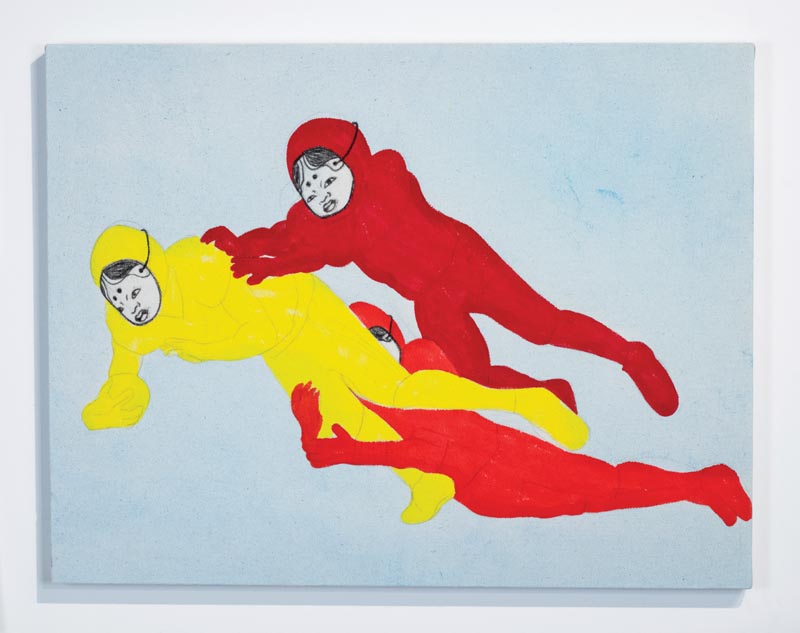
“I’m really interested in thinking about how these cultures have combined in my family, but also how that reflects globalization as a whole. I find it interesting, for example, that American animation was exported to Japan, which led to this huge boom in Japanese anime, which is now being exported back to the U.S.”
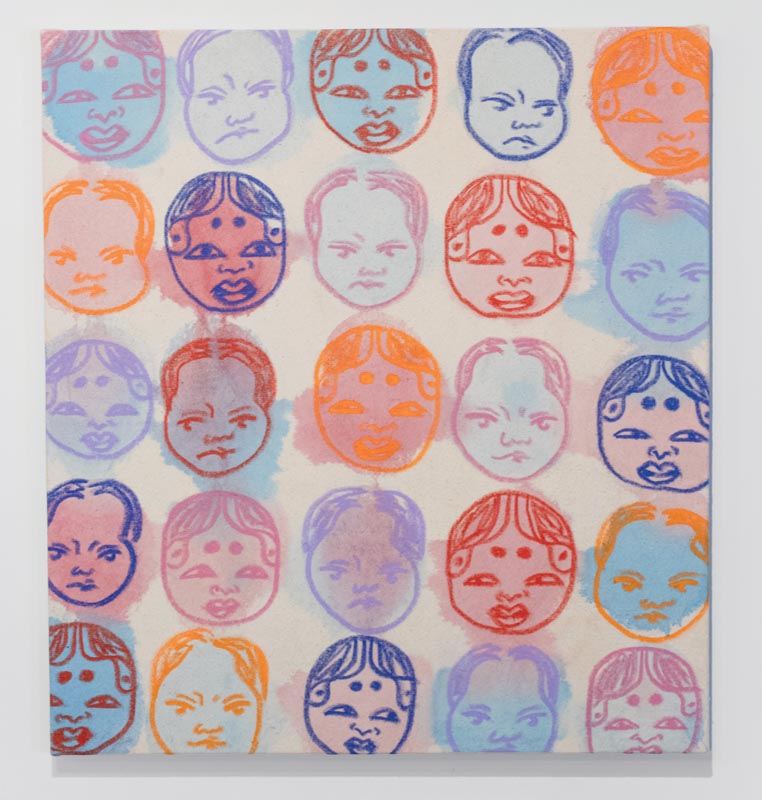
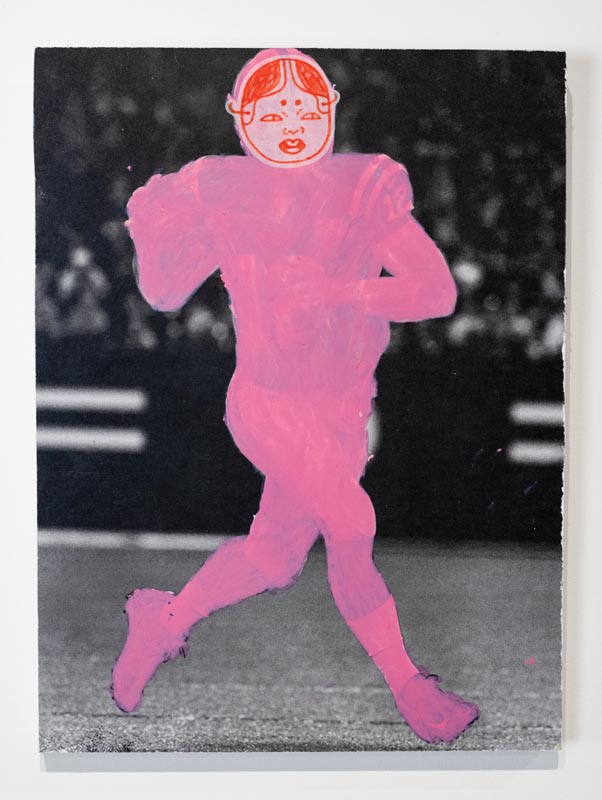
While Clayton’s paintings are vividly illustrated with heavy lines and bright colors, they clearly feel more at home in a fine arts environment. The influence of animation, however, extends beyond the aesthetic and into the narrative world-building where her characters exist.
“I’ve been drawing a lot of football players, and then I will have them wearing a Japanese Noh mask, which is used to represent female youth and beauty in traditional performance. So these figures are using gender to represent the two different cultures, kind of dancing and fighting together at the same time.
“The West prides itself in projections of strength and machoness in a way that Eastern cultures are less concerned with. I think a lot about the Japanese concept of kawaii, which roughly translates as cuteness. It’s young, it’s girly, it’s all of these things.”
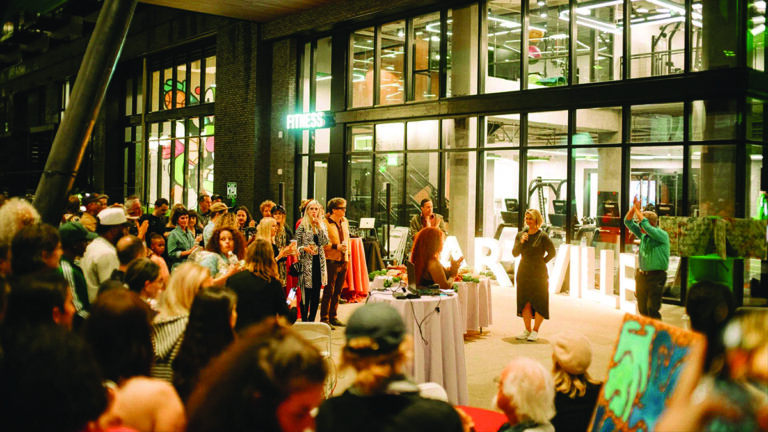
Clayton is the programming director at Arcade Arts Nashville. She is co-curating “Her Place” — a show of contemporary women artists working in Nashville, set to open at Frist Art Museum in January 2026.
saiclayton.com
@sai_tries