When Brenda and Dan Cook bought the old West Nashville United Methodist Church, it didn’t inspire many design hosannas. Look heavenward inside the sanctuary: pockmarked, office-grade drop-ceiling tiles. Down: greasy red shag carpeting.
But the Cooks felt prepared to change its tune, having successfully rehabbed a run-down Primitive Baptist Church into Ruby, another stylish boutique event space, operating in Hillsboro Village since 201.
Or, anyhow, they felt prepared-ish.
“It was in rough shape,” Dan said, throwing an arm up toward an example inside the building now known as Clementine Hall. “All these steel supports here? Those are to prevent this whole wall from falling into the alley.”
He laughed and shrugged. “Those are things you don’t know at the beginning.”
Secrets and Surprises
The 1889 structure did have its secrets. But as the project got underway, the spouses, co-architects, and co-designers in charge — who work together as Dragon Park — found that 4710 Charlotte Avenue had treasures waiting to be uncovered. (Then repaired, reimagined, and renewed.)
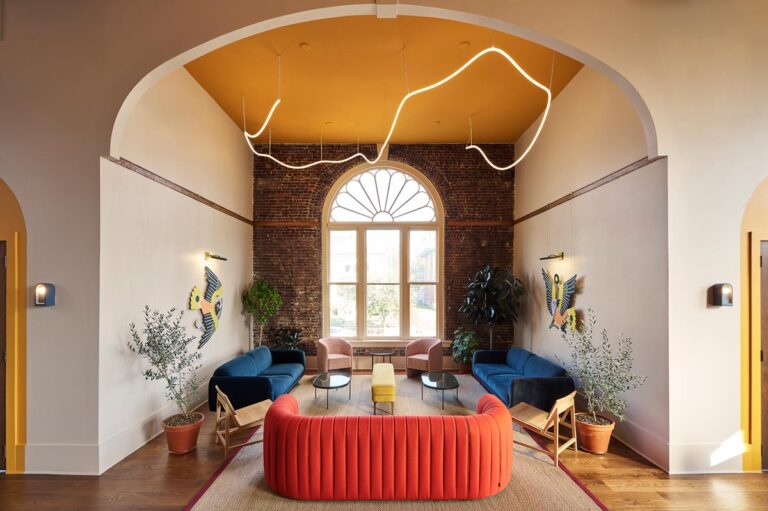
The main sanctuary, now known as Adelaide Hall, held quite a few.
Under the drop ceiling: wood beadboard with personality and potential. Under that beadboard: beams that screamed grandeur.
Layers and layers of plaster and globs of concrete hid wall after wall of beautiful original brick — plus a bunch of once-forgotten, now-formidable arched windows.
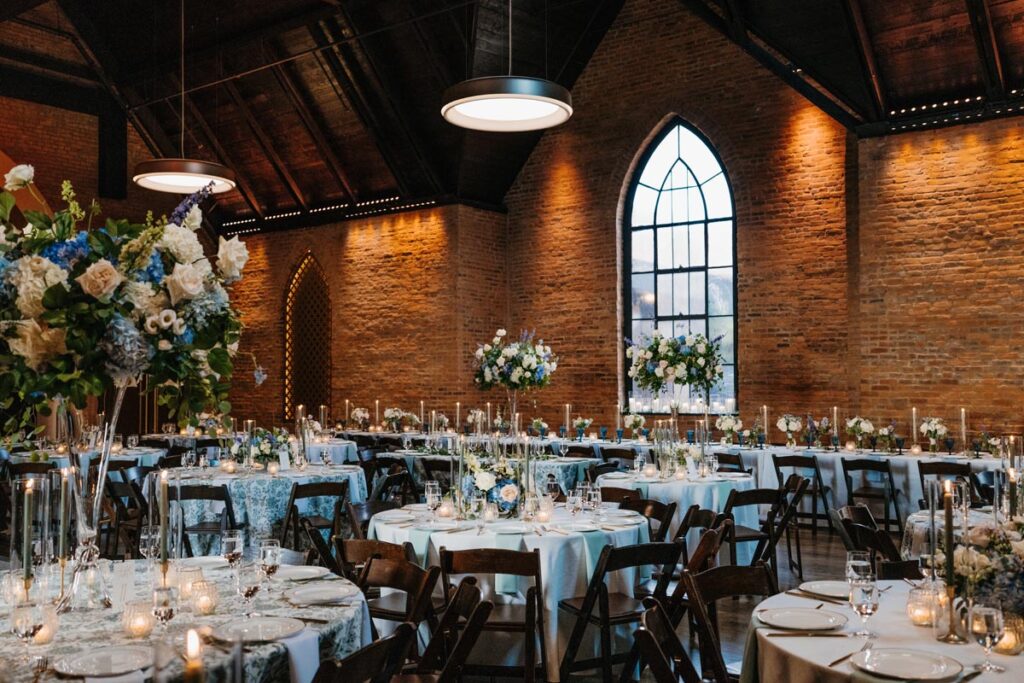
“When we took off the plaster, we’re like, ‘Whoa, look at that!” Brenda remembered, wide-eyed.
The secret windows were certainly staying. But they set the tone for nearly every rescue effort inside Clementine Hall: No restoration project was going down easy.
“There were a lot of, uh, architectural design challenges,” Dan said, trailing into a laugh. “One was, when you find these, what used to be windows, and they can no longer be windows because there’s a building on the other side now, how do you maintain those, but obviously not return them to their 100% original function, which is impossible?”
Solutions and Sound waves
The Cooks hit that challenge and the others with equal parts creativity and reverence.
For the windows, they designed warm brass screens stamped with gothic quatrefoils, drawing inspiration from the sanctuary’s existing, but not original, chandeliers. Those chandeliers moved over to the adjacent space, now known as the Little Bird Lounge, where the Cooks uncovered another treasure: a walled-in original fireplace.
That one took muscle to renew, plus years of searching for an appropriate mantel. (They did eventually find one from the right era at the right size, made in Nashville. They joke that they probably bought their own mantel back.)
Clementine Hall’s biggest and least-expected restoration project, though, took the Cooks and the venue viral.
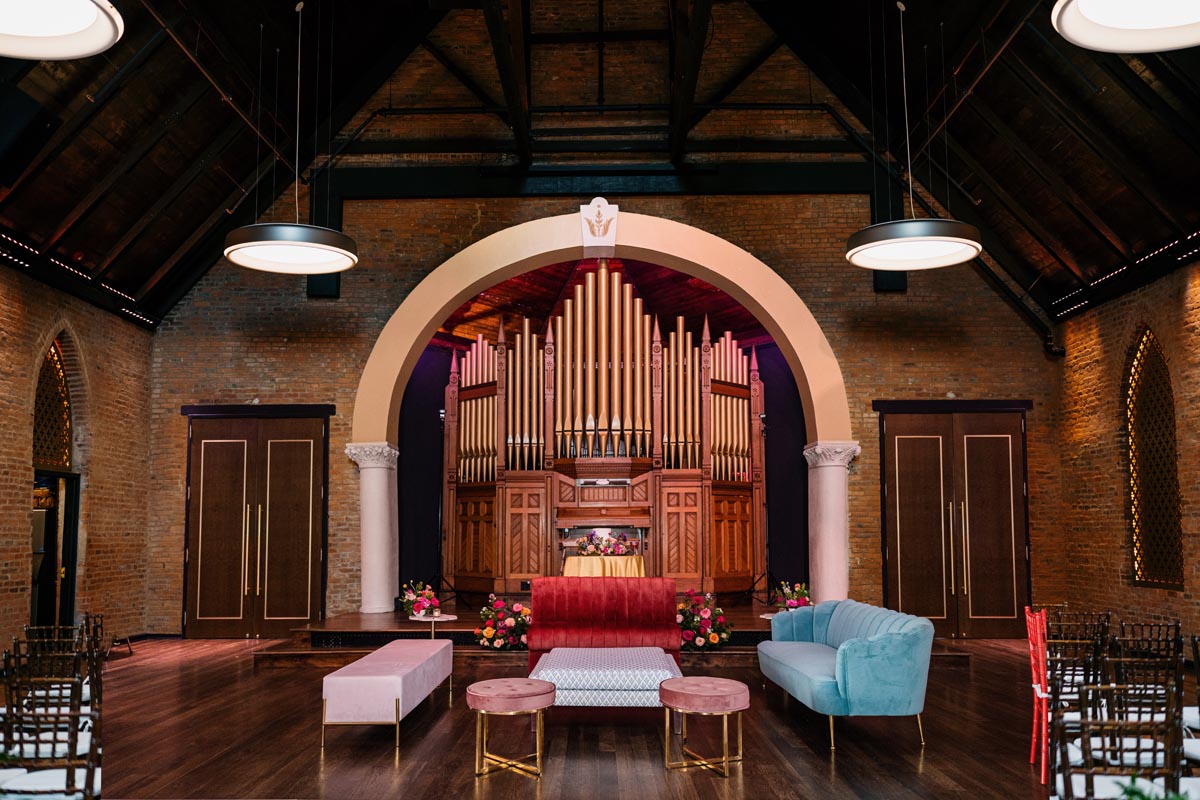
A gargantuan, circa-1905 George Kilgen & Son pipe organ, just like the one in New York’s St. Patrick’s Cathedral, anchored the sanctuary. With its size and not-necessarily-needed function, the Cooks figured they’d have to remove it. But a love of history and craftsmanship wouldn’t allow them to destroy it.
Dan called The Tennessean, offering the instrument for free if someone was willing to have it moved. The story hit USA Today, then went global.


“We were getting hundreds of calls from all over the world,” Dan said. Grammy-winning producer T Bone Burnett came in to pay homage to the organ. Widespread Panic’s John “JoJo” Hermann did as well.
“I think we looked at each other one day and said, ‘Well, maybe we give it a go,’” Dan said. “’Maybe we repair it and maintain it and see how the customer responds.’ And they did, very positively.”
Dennis P. Milnar, who rebuilt the organ after a 1965 fire and maintained it for nearly 55 years, renewed it again. (The Cooks reworked some of the old beadboard for the ceiling above it.)
Today, the Kilgen organ is a centerpiece and a calling card.
“In eight or nine years here,” Dan said, “it rarely gets covered intentionally.”
Reading the Room
While the Cooks are enamored with the building’s history, they didn’t want Clementine Hall just to be a picture of the past. To balance old and new — respecting history but giving the venue its own distinct future — the couple stayed flexible and read the room.
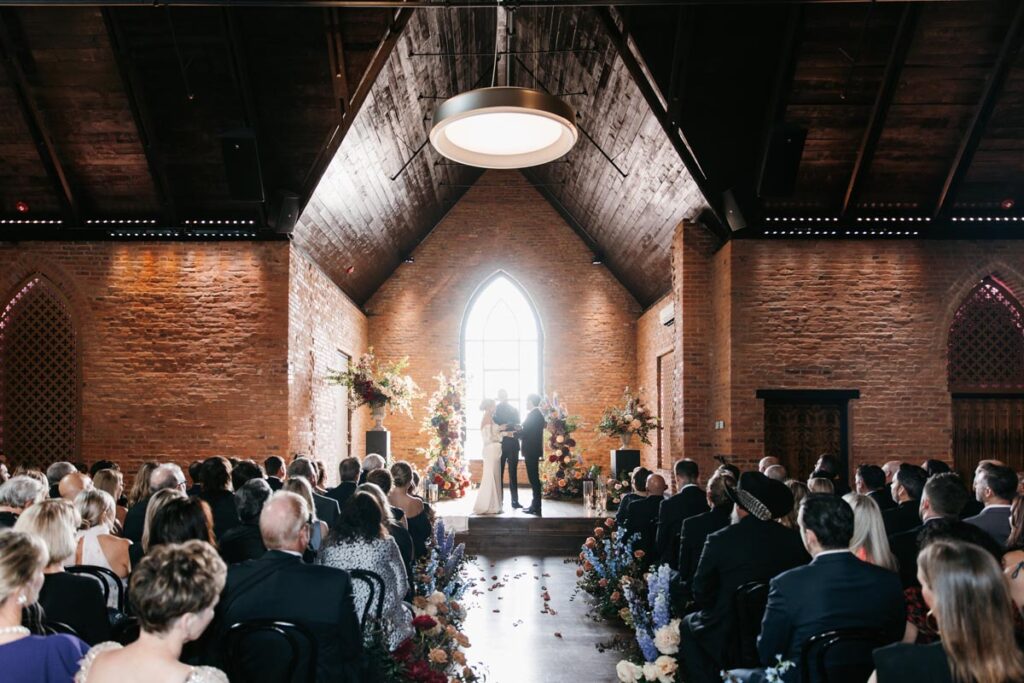
They brought in counterpoints, like the massive modernist Poulsen pendants that warm up Adelaide Hall, the red neon Clementine signage out front, and the dark, sophisticated marble on the 20-foot bar in the lounge.
They also turned problems into jumping-off points.
Some of the venue’s moodier palettes — like the black and gold in the Little Bird — pulled inspiration from staining on the brick behind old wainscoting and from charred beams that survived the fire.
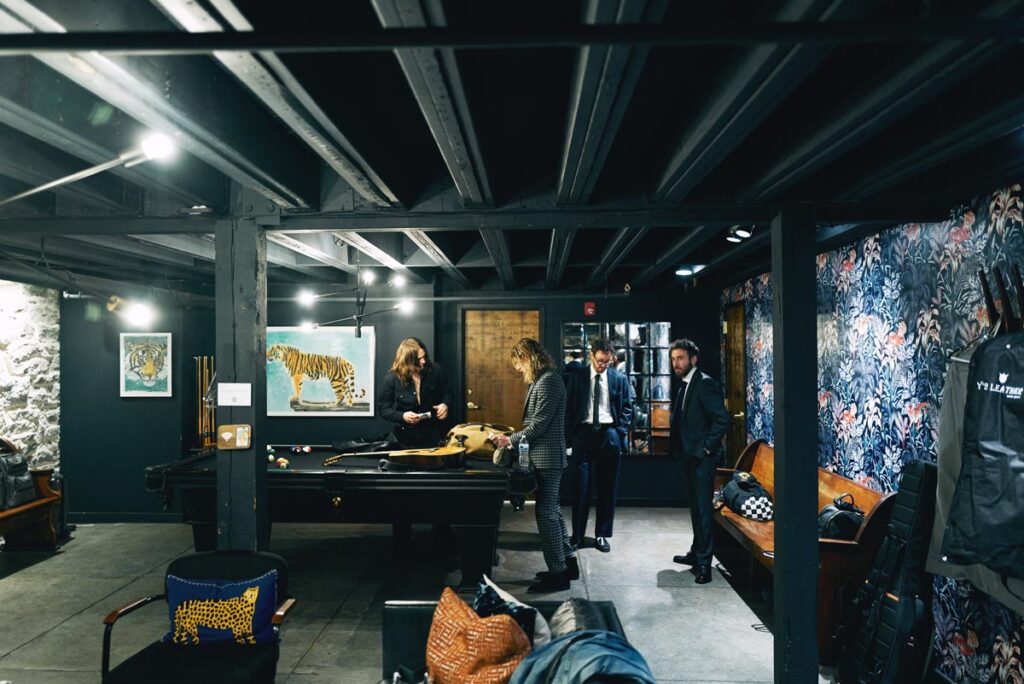
Downstairs in the Tiger Room, the co-designers wrenched cozy and cool, mid-century-basement-bar style out of a once “spooky” space that gave them a full case of the creeps.
“Now it’s maybe my favorite room,” Dan said. Brenda agreed. “It’s got a good vibe.”
Function and Form
Vibes are key to a successful event space. But writ large, the Cooks’ approach to Clementine Hall followed function as much as form.
“The luxury of having run another venue for seven or eight years beforehand is that we had a long list of things that we wanted or that we knew venues needed,” Dan said. “The art for us was taking this big space and really thinking through the floor plan in a way that made sense.”
They put the Bird and Tiger dressing rooms on separate floors, with separate entryways. Brides and grooms who traffic in tradition appreciate the barrier to pre-ceremony glimpses. The Cooks also built a full catering kitchen for on-site food prep, and added the Flower dressing room for bands and performers. Both of those spaces, very intentionally, are right by the load-in doors.
Pretty and practical come together in many of the finishing touches, too.
Repurposed antique schoolhouse chalkboard slate covers the far entryway walls, setting a sleek and elegant tone while giving hosts a place to scribble welcome notes and directions.
Rising Sun Redbud trees line the sidewalk in the front, adding picturesque texture and color to the privacy of the front courtyard while welcoming wedding guests with a splash of heart-shaped leaves.
“In the spring, they’re orange, so that’s kinda cool — the Clementine theme,” Brenda said, confirming that these little details, the conceptual and decorative knots that tie the whole place together, aren’t happenstance. “That’s the fun part, right?”
Keeping the Story Going
If you were a bride, groom, or event planner who didn’t know anything about Clementine Hall’s history — its 19th-century beginnings, the many additions that happened along the way, the fire that almost destroyed the building but didn’t — you’d still find plenty to draw you in, from the cathedral grandeur to the design details.
But the story adds something special, especially in new Nashville, and the Cooks get that.
They’re happy to regale visitors with tales of hidden treasures and famous pipe-organ fans, but to make the storytelling seamless, the Cooks added small plaques with QR codes throughout the venue. Scan a code and your smartphone transports you to before-and-after photos and details, and stories about the origins, renovations, and intentions.
“Anything that might have happened in that room or to that item,” Dan said, got captured and chronicled and uploaded where the code goes. (It’s all accessible on
ClementineHall.com).
And they’re regularly adding to it as they unearth new details, maintaining a living testament to a place that’s held more than a century’s worth of promises, prayers, first dances and teary toasts.
“I think the realization hit us that it would be a real pity if everything we learned about the history of the building was lost with us,” Dan said. “I’m a firm believer that history should stay with the place and shouldn’t be lost or rewritten later. So this is a way for us to download it all and make it available to everybody.”