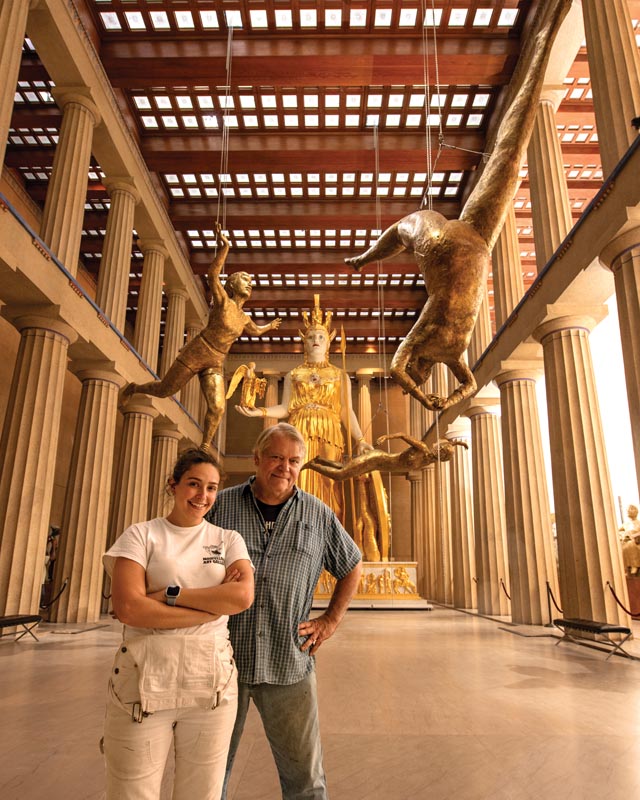
tep up close to the Athena Parthenos statue in Nashville — golden, glinting, stretching 42 feet toward the Parthenon replica’s ceiling — and you’re left dumbstruck by the sheer scope of what she is and represents.
The Greek goddess of wisdom. Lost history reborn. A civic touchstone standing impossibly tall, drawing fascinated tourists from around the world to Tennessee.
She’s also a gilded picture of eight full years of Nashville sculptor Alan LeQuire’s life. Unveiled in 1990, the replica took tens of thousands of hours of dutiful research, open-eyed experimentation and careful craftsmanship, completed by a young man with bold ideas and practiced hands.
Decades later, LeQuire still visits fairly frequently, often to talk to school kids about what the statue and her replicated home mean.
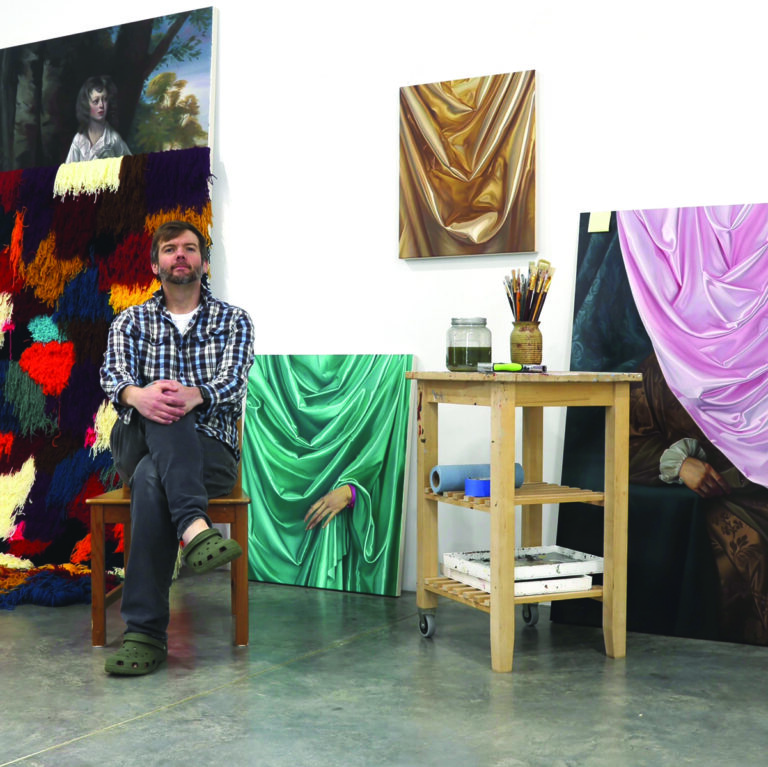
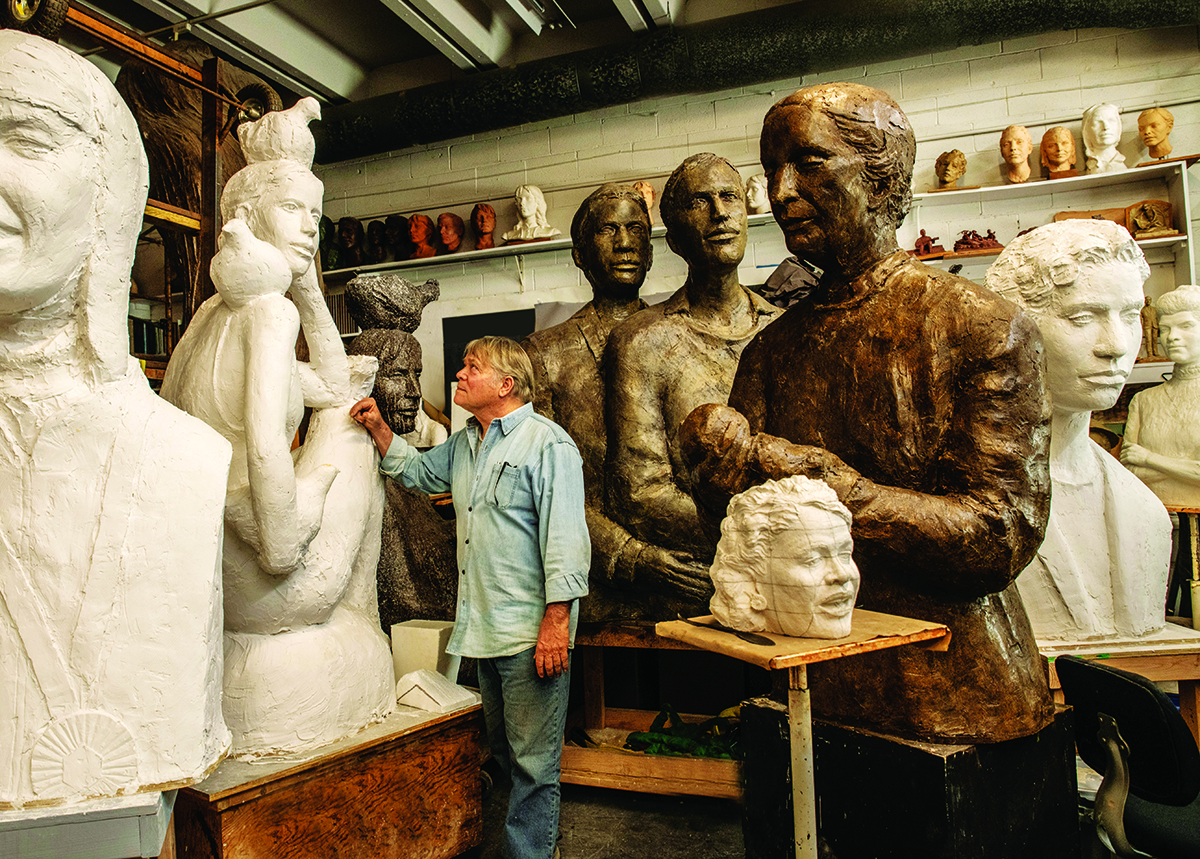
“I sometimes look back at Athena and think, ‘Wow, if Amber had been around, I could have done that in four years,’” he says, smiling, flanked by completed works and works in progress in his Nashville studio. A maquette of his famous Musica piece perches just over his right shoulder. Studio manager Amber Lelli laughs to his left.
Lelli doesn’t co-sign the estimate, but as they break down what went into LeQuire’s two recent Parthenon exhibitions, “Goddess in Progress” and “Monumental Figures,” it’s not hard to imagine he’s got it dead on.
“It was an average of, like, a sculpture every two weeks or something,” Lelli remembers. The normal timeline for major pieces like this is closer to three-plus months each.
“My focus was not really in the grand picture of how this is all gonna come together,” she says. “It was more like, ‘What do we have to do today?’”
NEW WORK, OLD MEMORIES
That year of focused, comparatively frenzied work was recently on view at the Parthenon and invited visitors to reflect on the past while examining where and how a master sculptor’s skills and inspiration grew.
Stretching across the public spaces, including outdoors, the exhibitions didn’t supplant Athena’s impact so much as complement it.
“Goddess in Progress,” in the East Gallery, told the statue’s origin story in photos, videos and details captured and kept, tracking back to its commission in 1982.
Pulling it all together was a labor of love, LeQuire and Lelli say, and one that had already begun before to the exhibition call, for a forthcoming book under the same name. But it did require labor.
“The biggest challenge for me was remembering,”LeQuire says, laughing. “I’ve forgotten almost everything.”
Athena’s development didn’t leave much of a paper trail, with archaeological explorations and conversations happening largely by phone in the 1980s. A lot of the tactile history LeQuire did have was lost to a studio fire. Luckily, over the course of those eight years, he’d been visited by photographers and videographers who’d held on to slides and footage depicting the goddess’ gradual growth, happening alongside the artist’s.
“It gave me a really cool, unique perspective,” Lelli says of combing through the artifacts.
At 32, she’s about the same age LeQuire was then. And like LeQuire, she’s building a reputation for majestic pieces of public art in and around Nashville.
In 2024, her Celestial Falls — a 28-foot-long, 17-foot-high mixed media sculpture inspired by nature and community — was unveiled at the Nashville Public Library’s Donelson branch.
“I think, as a sculptor, you’re always thinking about scale, and you love the opportunity to go big,” Lelli says. “So as my career has gone, I’ve gotten more of those opportunities. And working with Alan has provided me the avenue to know how to scale, and how to manage some of those processes of going big. It’s maybe made it less intimidating than it would be if I wouldn’t have had that experience.”
TEACHERS’ TEACHERS’ TEACHERS
Working with and learning from LeQuire is a valuable experience for rising artists like Lelli. But by design, it hasn’t been an exclusive one. For years, LeQuire hosted Open Studio nights in Nashville, inviting local and visiting artists to listen, learn and do.
His own skills were shaped in part through the Atelier Method, an apprenticeship practice in which a master passes on their body of knowledge. Before Athena, he worked in Italy as an apprentice to the late sculptor Milton Hebald. Across decades, he’s remained committed to carrying that approach forward.
“An artist can trace their lineage through their teachers and their teachers’ teachers,” LeQuire says. “I think that’s really cool.”
The process of developing and completing “Monumental Figures” offered a clear testament to the power of that practice and the wisdom of LeQuire and his teachers’ teachers.
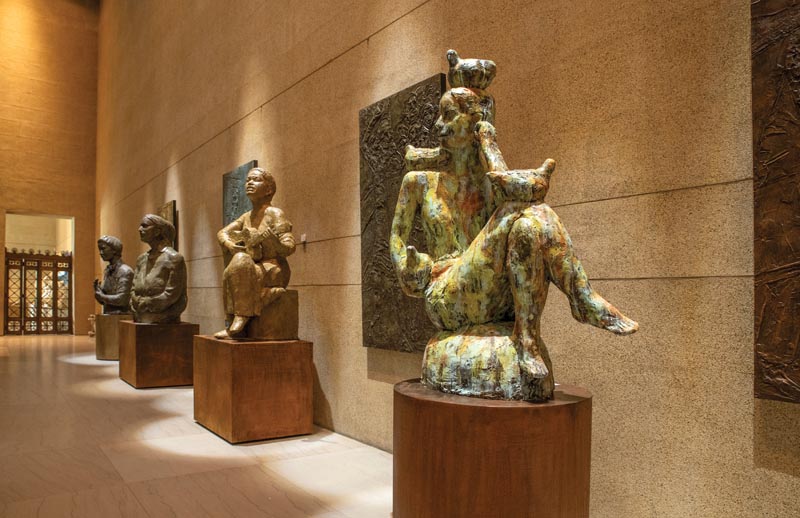
The exhibition featured 24 large-scale sculptures and eight wall-anchoring relief paintings, each depicting or imagining “everyday heroes,” from activists and athletes to musicians and medical minds.
LeQuire envisioned and shaped the direction, and with Lelli and a cast of dedicated assistants, brought that vision to its larger-than-life but pointedly true-to-life unveiling.
The subjects spanned famous and semi-famous names — Joan Baez, Odetta, pioneering neonatologist Dr. Mildred Stahlman and trailblazing surgeon Dr. Dorothy Brown — to folks whose names wouldn’t land on a marquee. Sisters. Lovers. LeQuire’s grandma, Eleanor Brickey, with a small flock of chickens.
“I didn’t want it to be a bunch of people to idolize,” LeQuire says. “The idea is that we’re all worthy of monumental statues.”
Since they shared a space with a golden goddess, the inclusion of these regular folks made a grand statement, wrapped in contrast. The sculptures themselves did too.
To create Athena Parthenos, LeQuire laser-focused his intentions on how sculptor Milton Hebald would have done it, curve by curve, tone to texture. Scholars say he hit the mark.
The pieces created for and collected in “Monumental Figures” came from a different point of view, with rugged textures and natural patinas that came directly from LeQuire’s own interests and imagination.
Weaving through the 10 pieces in the Parthenon’s Treasury — imposing human torsos in a collection called “Complete and Unbroken,” nodding to the casts of fragmented original Parthenon Marbles housed in this space — it felt like this work wasn’t sculpted so much as it grew up out of the ground, the fruits of a seed planted 35 years ago.
Early on, LeQuire says, he felt intimidated by other people’s taste and how they were trying to influence him. He had instincts, but he didn’t heed them. His own voice stayed quiet.
“All that’s in the past now,” the artist says, surrounded by reflections of his own voice, sitting next to another gifted Nashville sculptor who’s soaking it all in. “I feel the freedom
to do whatever I want.”